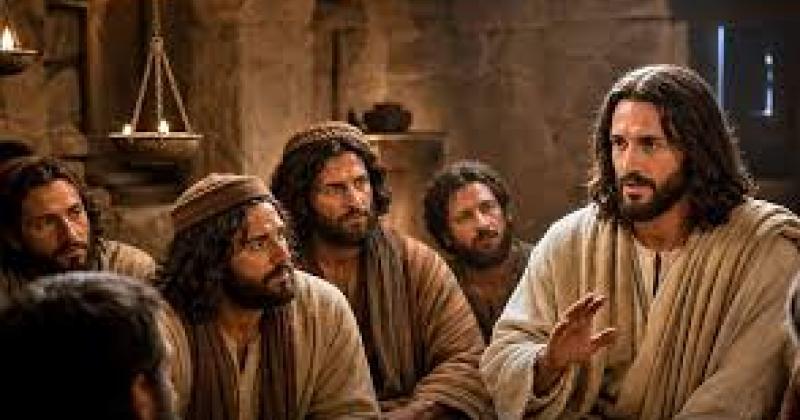
In these last four Sundays of the Easter season, we read from the discourse of the Lord at the last supper in the Gospel of John. The whole Gospel is a “mystagogy”, a journey into hidden realities, into a deeper understanding of the meaning of Jesus Christ. The poet John Keats professed to “hate poetry that has a palpable design upon us.” John’s Gospel most certainly has palpable, though subtle, purposes and intentions. Today’s text offers a typical example of his sinuous and winding repetitions. It starts and concludes with a declaration that loving Jesus means observing my commandments. But my commandments are not an interminable litany of regulations, precepts, injunctions and pharisaical burdens. One chapter later in the same discourse, Jesus clarifies what he means: This is my commandment, that you love one another as I have loved you. (John 15:12)
Jesus had already promised to send the Holy Spirit (now this he said about the Spirit, which those who believed in him were to receive, John 7:39); in the context of the supper, however, this promise will be repeated five times of which we have the first today. The Spirit will twice be called the Spirit of truth (John 14:17 and 16:13). Don’t you long in your hearts for that gift? In a menacing world of lies and manipulations and manicured sound-bites and falsity masquerading as truth, don’t you wish for the peace of heart that flourishes in the soil of truth? The Johannine concept of truth is inspiring. In the last analysis, it is not an abstract quality but a person: a few verses earlier in the same chapter of John, we hear the words, I am the way, and the truth, and the life; (John 14:6) and Pilate’s bemused or cynical question, What is truth? (Jn 18:38) finds its answer standing literally in front of him.
Today’s gospel passage weaves together strands of the trinitarian relationship, and we are drawn into this wondrous tapestry. Love is prominent in John, and forms an inclusion in today’s seven verses: they open with the phrase, if you love me… (John 14:15) and close with the same, repeated four times: he it is who loves me; and he who loves me will be loved by my Father, and I will love him… (John 14:21)
Generated by the love of God, drawn into the mystery of the life of the Trinity, we are invited to accept and to respond, to love in return and to be men and women of truth and integrity, a spiritual and moral backbone to a stumbling world.