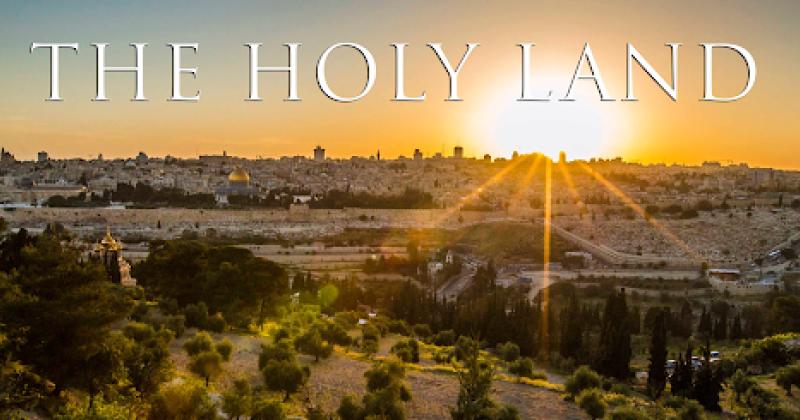
Over the past two years, pilgrimage to the Holy Land has diminished to a very low point with fewer than ever groups visiting the holy sites in the land that marks the birth of Lord Jesus Christ, His death, and resurrection from the dead. This has been attributed to the state of instability and violence that gravely rocked the region and created a topsy-turvy situation.
With the winds of shaky peace blowing over the region, hopes are hinged on the restoration of the status quo ante for the Holy Land by making gargantuan records. The Holy Land relies greatly on the arrival of people making pilgrimage to the holy sites in the Holy Land as this provides a boost to the economy that has been bereft of any support, with local people finding difficulty to eke out a living and to make ends meet.
Religious tourism has two benefits as it introduces pilgrims to the aroma of the Holy places with memories tracing the events that took place in this land according to the Holy Bible in the first place, and it resuscitates an ailing economy which is reflected on families failing to enjoy a stable state on the one hand while fearing for the future on the other.
With the Holy Land awaiting the presence of Christians from around the world, Custos of the Holy Land Fr. Francesco Ielpo said, "“This land belongs to everyone. These shrines are the shrines of all Christendom. And here, we friars of the Custody of the Holy Land — and I would dare to say the entire local Church — are waiting for you. We truly long to welcome you with open arms, because pilgrimage is a life-changing experience. It is the experience of genuine encounter. Christians need your visit. They need to feel that they are still protagonists in a land where their presence is meaningful, not marginal — where they continue to give life to these holy places. We are waiting for you. It is good for you, and it is good for us.”
On the other hand, His Beatitude Cardinal Pierbattista Pizzaballa said: “Pilgrimage to the Holy Land is the pilgrimage par excellence, because it is an encounter with Jesus, with His humanity, with His story — an encounter that takes place here, concretely, in the holy places where Jesus lived, and also with the small Christian community that has suffered greatly in these years… I must say how beautiful it has been to see how close you have been to us — through prayer, witness, and many forms of solidarity. Once again, I renew my wish and my prayer that we may finally meet not through the lens of a camera, but face to face here in the Holy Land.”
On Saturday 6 December 2025, Bethlehem experienced a moment of deep emotion, with thousands of people gathering in the square of the city to witness the rekindling of the Christmas tree, which is an impressive gesture that marks the return of a deeply rooted tradition in the city that gave birth to the Savior, Lord Jesus Christ. Bethlehem had refrained from public Christmas celebrations over the past two years, as this year crowds thronged the square to celebrate, watch and enjoy, because for the past years they haven't had the chance to do so.
Bethlehem Mayor Maher Canawati says, "It has been a bad two years of silence; no Christmas, no jobs, no work. We are all living here from tourism and tourism was down to zero." Referring to Christmas celebrations in Bethlehem, he adds: “Deep inside my heart, I felt that this was the right thing to do because Christmas should never be stopped or cancelled. This is the light of hope for us."
He accepts the idea that resuming celebrations was not without controversy, as suffering continues in Gaza – including for those in its tiny Christian community, many of whom have relatives in Bethlehem.
It is hoped that in the period of Advent, and with the advent of peace, that religious tourism would be attained in full swing so as to restore the missed opportunities for a stable and promising future.
The Holy land is the gem of religious tourism. With the expected arrival of masses of tourists in the Holy Land, a new life will be breathed into the future of the people living there with assurances that the holy places will always be reminiscent of the beauty of this land that will hopefully remain a model of peace, tranquility, and common living.